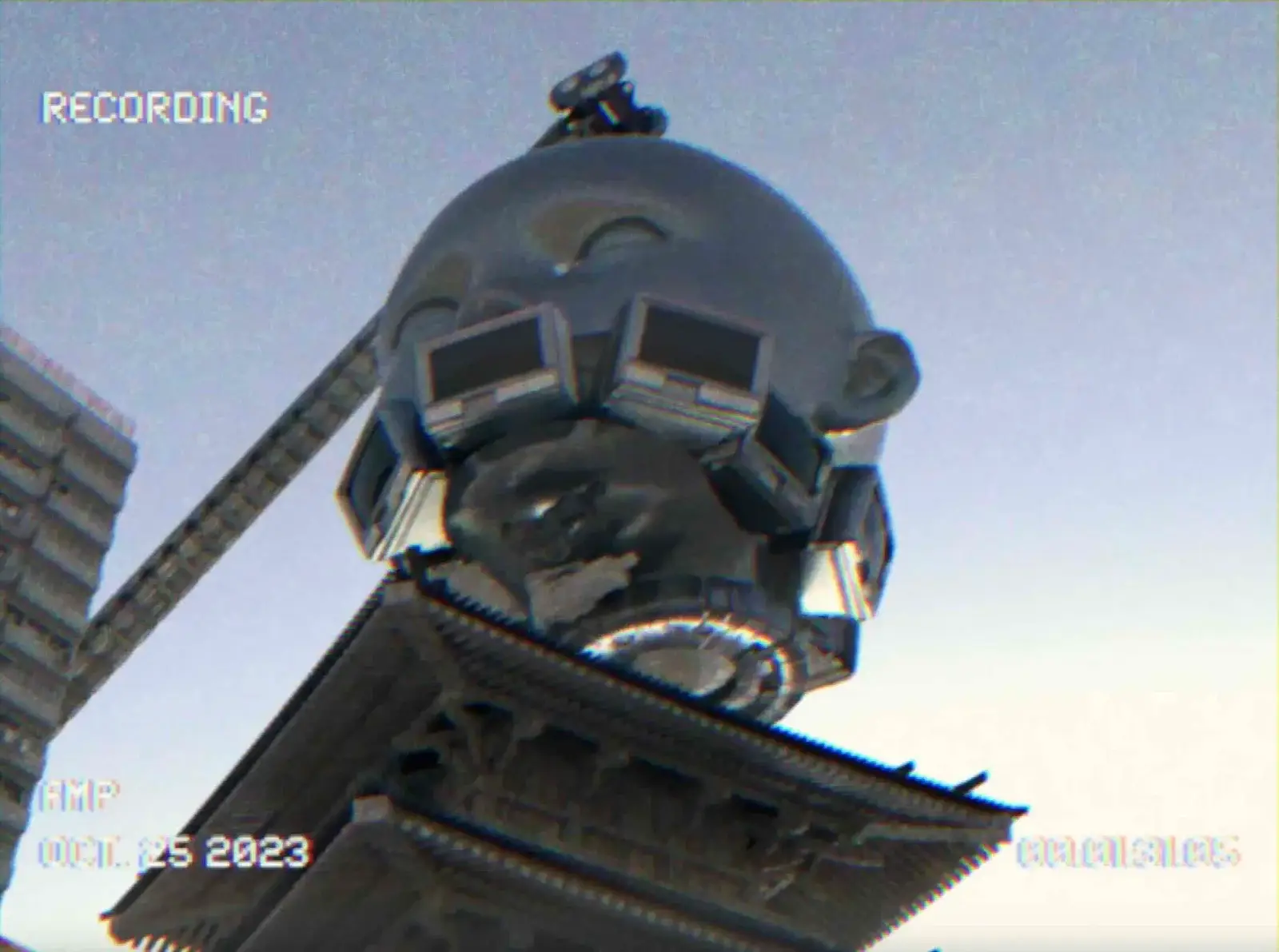
In a world where everyone’s trying to sound like everyone else—clearer, flatter, cleaner—this head does the opposite. It collects what’s left: the forgotten accents, the sidelined dialects, the stubborn syllables that don’t quite fit the standard mold. Then it speaks them back. Loudly. Artificially. Unapologetically.
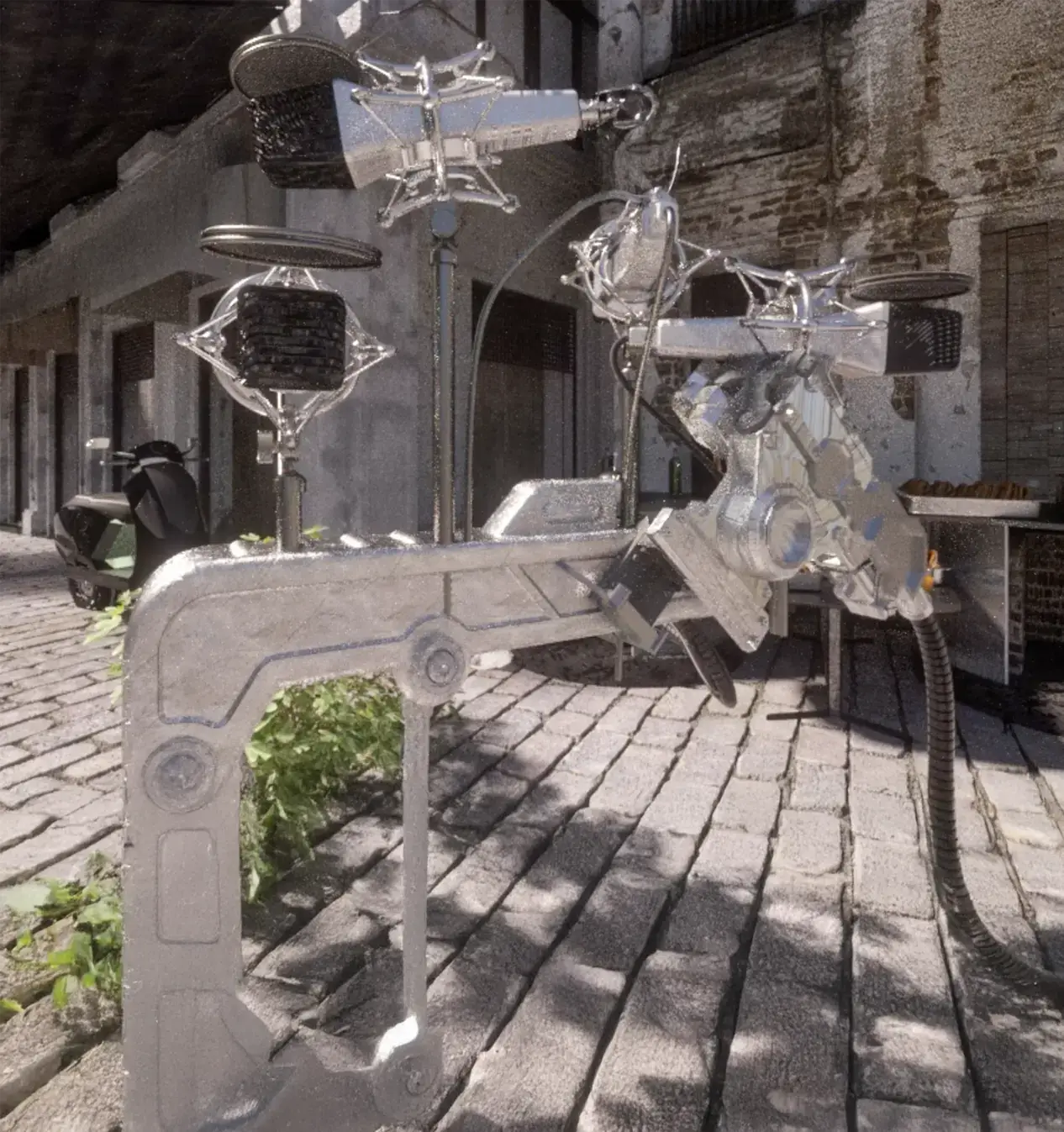
Dispersed across space, this device gathers all that language holds.
Then the information is transmitted to the head.
It doesn’t translate. It doesn’t correct. It doesn’t care if you understand.
The languages it mimics are already slipping—choked out by algorithms, curriculum, and convenience. What it plays is broken, glitched, sometimes eerily lifelike, sometimes wrong in all the right ways. That’s the point.
This machine wasn’t built to save a language. It was built to remember the failure of trying.
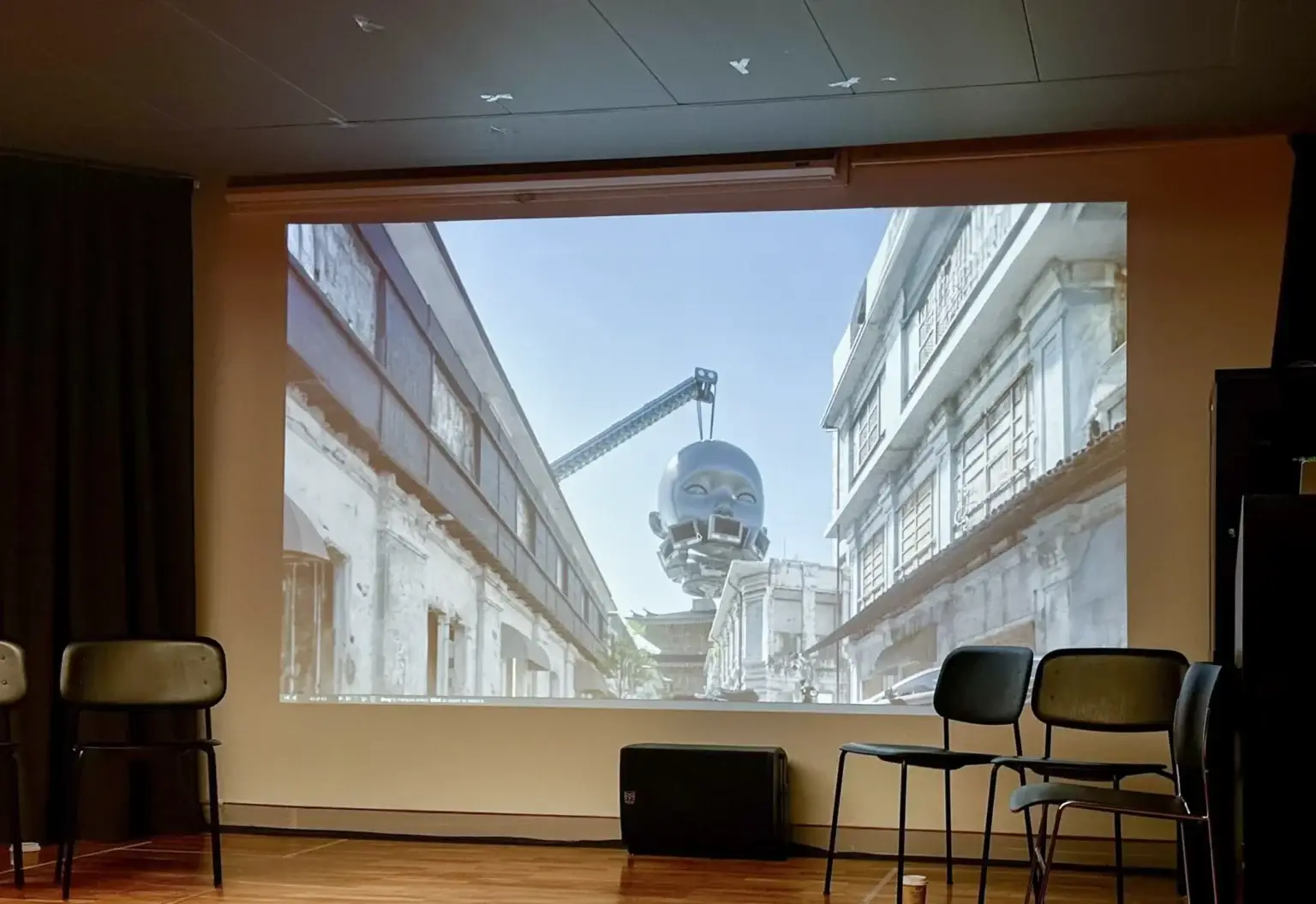
Perched between old buildings like a fever dream of urban infrastructure, the mechanical head mouths voices that were never meant to be stored, indexed, or broadcast. Yet here they are—spoken not by a person, but by a face with speakers for a jaw. A synthetic tongue trying to replicate what the world is trying to forget.
Is this preservation? Not really.
Is it protest? Maybe.
A love letter? Definitely not.
It’s a monument to everything that resists being streamlined.
And a quiet reminder: not all voices want to be understood.